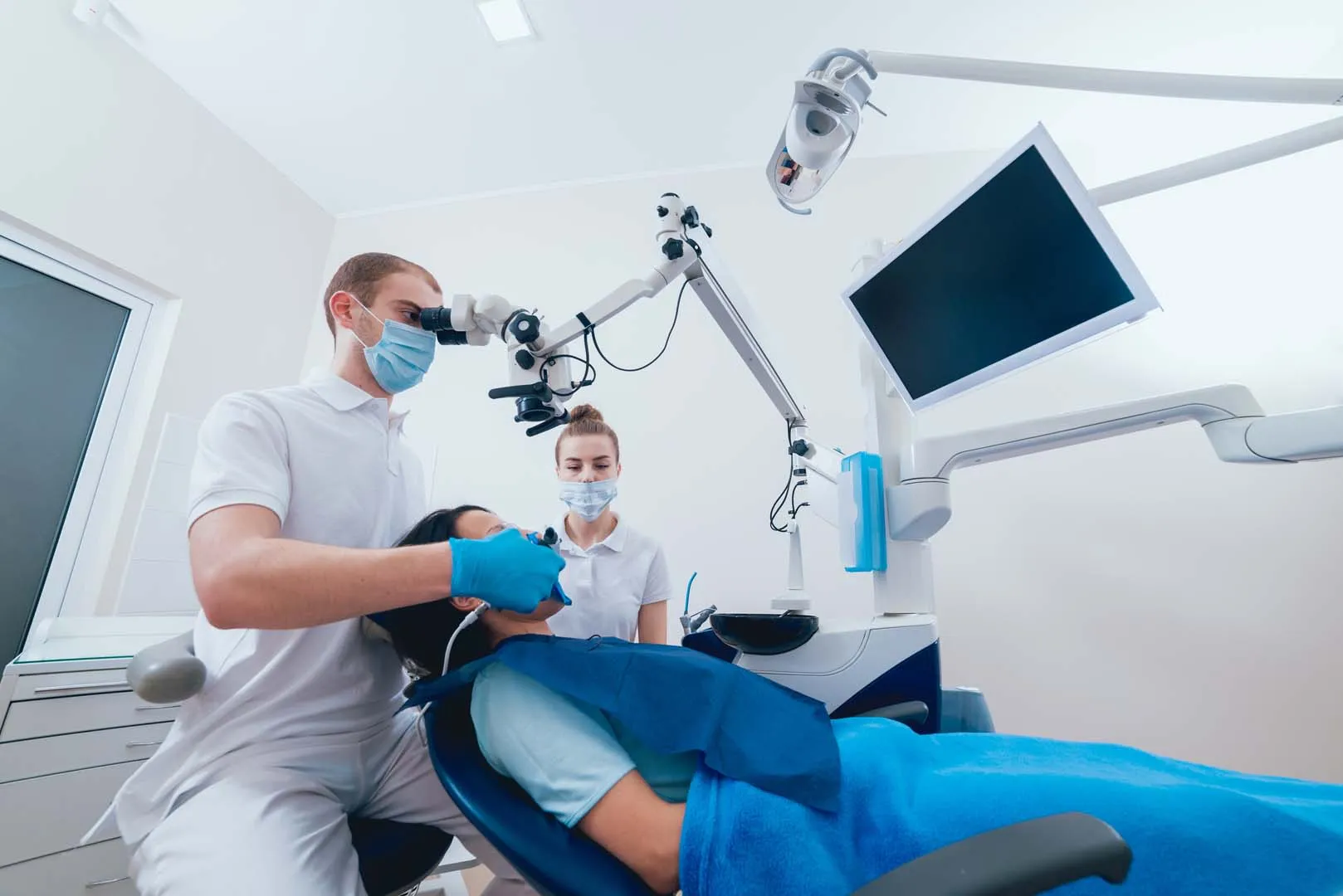
Why Choose a Specialist for Root Canal Retreatment
Retreatment is more complex than a first-time root canal. It requires removing existing filling material, locating canals that may have been missed, and thoroughly cleaning areas of persistent infection — all without damaging the tooth structure. This level of precision is where a dedicated endodontist makes a meaningful difference compared to a general dentist.
Dr. Molina's 30-plus years of focused endodontic practice mean she has encountered virtually every scenario that causes a root canal to fail. Her office features 3D CT/CBCT scanning that reveals hidden anatomy standard X-rays can miss, giving her a detailed roadmap before treatment begins. Combined with real-time radiographic monitoring during the procedure, this technology helps ensure thorough treatment the second time around.
For patients who feel anxious about undergoing another procedure, a board-certified dental anesthesiologist is on staff to administer IV sedation, oral sedation, nitrous oxide, or general anesthesia — a level of comfort rarely available at other endodontic practices.
What Is Endodontic Retreatment?
Endodontic retreatment is a procedure designed to save a tooth that was previously treated with root canal therapy but has not fully healed or has developed new problems. The endodontist reopens the tooth, removes the original filling material, re-cleans and reshapes the canals, and places new filling material to seal the tooth against future infection. The goal is the same as the original procedure — to eliminate infection and preserve your natural tooth.
Common Reasons a Root Canal Fails
A failed root canal doesn't necessarily mean something went wrong during the first procedure. Several factors can contribute:
- Missed canals — Some teeth have unusually shaped or extra canals that are difficult to detect without advanced imaging.
- Reinfection — Bacteria may re-enter through a crack, a leaking restoration, or new decay around the margins of a crown.
- Delayed crown placement — Waiting too long after the initial root canal therapy can leave the tooth vulnerable to contamination and fracture.
- Complex anatomy — Curved, narrow, or calcified canals may not have been fully cleaned during the original treatment.
Root Canal Retreatment vs. Initial Root Canal Therapy
While both procedures aim to save a natural tooth, retreatment involves additional steps that make it more involved. During an initial root canal, the endodontist accesses the pulp chamber for the first time. During retreatment, the existing filling material and any posts or buildup must be carefully removed before the canals can be re-cleaned. This often requires more time and specialized instruments. Retreatment also relies heavily on advanced imaging — such as 3D CT scans — to identify issues that were not visible during the first procedure. If you'd like to learn more about first-time treatment, visit our root canal therapy page.
What to Expect During Your Retreatment Visit
Understanding each step of the process can help ease any uncertainty you may feel about the procedure.
Before the Procedure
Your visit begins with a thorough examination, including 3D CT imaging to evaluate the treated tooth and surrounding bone. Dr. Molina will explain her findings, discuss your options, and answer every question before moving forward. If sedation is part of your plan, the team will review preparation instructions in advance.
During the Procedure
After numbing the area — using extra-gentle techniques our patients consistently appreciate — Dr. Molina reopens the tooth and carefully removes the previous filling material. She then re-cleans and reshapes each canal using magnification and real-time imaging to ensure no infected tissue remains. New filling material is placed, and the tooth is sealed with a temporary or permanent restoration.
Recovery and Aftercare
Most patients return to normal activities within a day or two. Mild soreness around the treated tooth is common and typically responds well to over-the-counter pain relievers. You'll receive detailed aftercare instructions and should follow up with your general dentist to have a permanent crown placed promptly — this step is essential for long-term success.
Sedation Options for a Comfortable Experience
We understand that facing another procedure after a failed root canal can feel overwhelming. That's why Molina Endodontics offers a full spectrum of sedation and comfort options, including IV sedation, oral sedation, nitrous oxide, and general anesthesia. A board-certified dental anesthesiologist administers and monitors your sedation on-site, providing a level of safety and comfort that most endodontic offices simply cannot match. Whether you prefer light relaxation or need to be fully asleep, we'll tailor the approach to your needs.
Board-Certified Dental Anesthesiologist on Staff
Sedation is administered and monitored on-site by a board-certified specialist — a safety advantage most endodontic offices cannot offer during retreatment cases.
Frequently Asked Questions About Root Canal Retreatment
Common signs include persistent pain or swelling around the treated tooth, sensitivity to heat or pressure, a recurring pimple on the gums, or new discoloration. If you notice any of these symptoms weeks or months after your original procedure, schedule an evaluation with an endodontist as soon as possible.
Most patients report little to no discomfort during the procedure. Local anesthesia keeps the area numb, and additional sedation options are available for patients with dental anxiety. Many patients are genuinely surprised by how comfortable the experience is.
Leaving a failed root canal untreated may allow infection to spread to surrounding bone and tissue, potentially leading to an abscess, bone loss, or the need for extraction. Early retreatment gives you the best chance of saving the natural tooth.
Cost varies depending on the tooth, case complexity, and your insurance coverage. We accept most major PPO plans — including Aetna, Delta Dental, Cigna, MetLife, and many others — and offer CareCredit financing. Visit our insurance and financing page or call for a personalized estimate.
When retreatment isn't the best path forward, an apicoectomy (endodontic microsurgery) may be recommended to address infection at the root tip. In some cases, extraction followed by a dental implant or bridge is considered. Dr. Molina will review every option with you so you can make an informed decision.